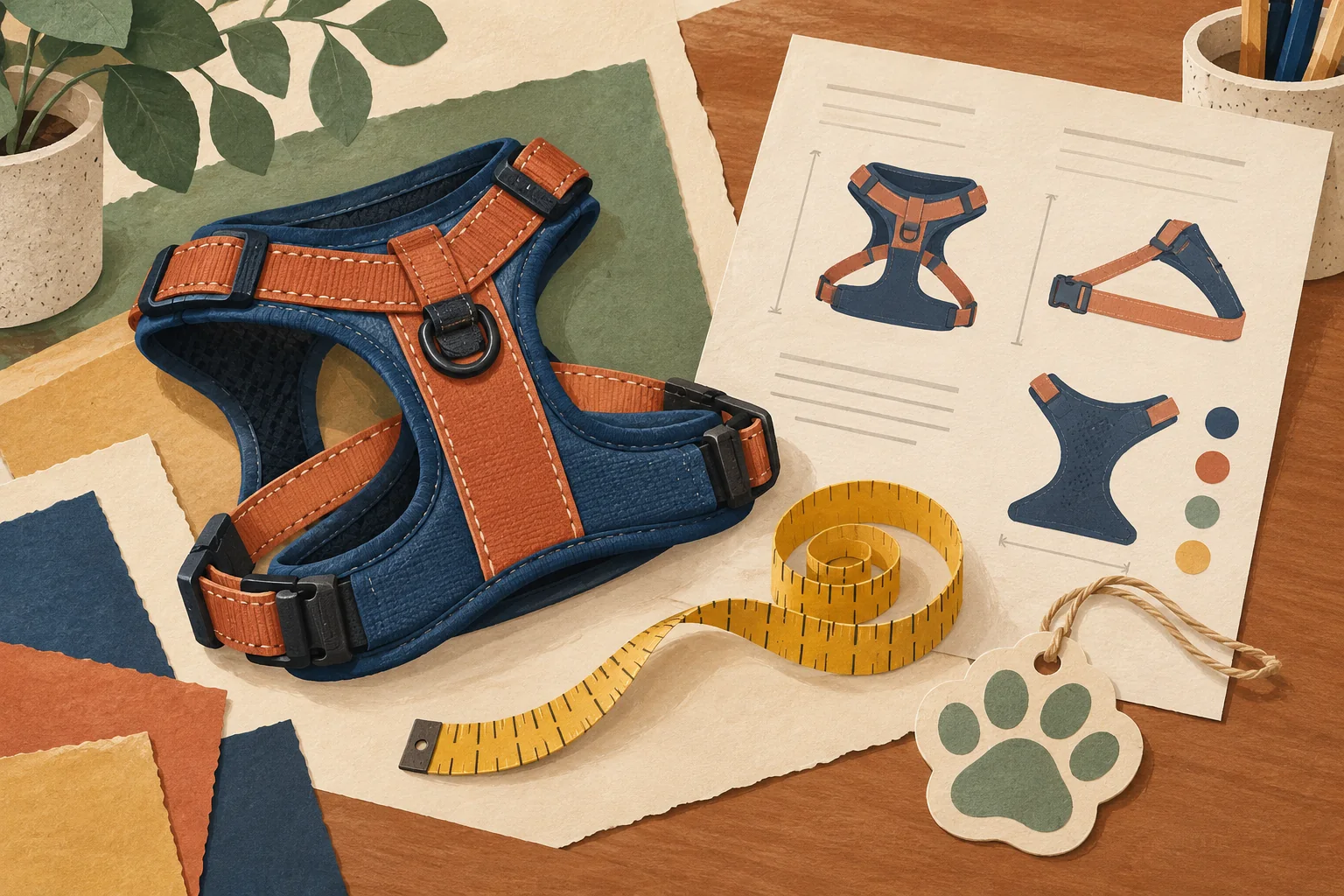
A pet product description should help a shopper decide whether an item fits the animal, the household, and the intended use. Attractive language cannot replace measurements, materials, care instructions, or clear limitations. When a description promises more than the supplier can support, it can create confusion for customers and additional work for the store.
This tutorial uses a fictional adjustable dog harness. It is an editorial example, not a product recommendation or veterinary advice. The same workflow can be adapted for beds, bowls, carriers, grooming tools, and other accessories, provided each product’s facts are verified against its own documentation.
Build a source sheet first
Collect the supplier’s specification sheet, packaging text, instructions, size chart, and any relevant test documentation. Record the exact model or SKU and the date checked. Similar-looking products can have different materials or dimensions. A fact copied from another seller’s listing is not a reliable substitute for the manufacturer’s information.
Create fields for product identity, intended use, dimensions, materials, package contents, care, warnings, and unknown details. Keep unknown information visible to the editor rather than filling it with plausible wording. If the supplier cannot confirm whether a cover is removable, do not describe it as removable because that feature is common in similar products.
Distinguish facts, benefits, and claims
A fact describes a verifiable feature: an adjustable chest strap or a stated measurement range. A benefit explains how that feature may help in an appropriate use: the adjustment allows the customer to fit the harness within the specified range. A stronger claim, such as “prevents pulling” or “eliminates discomfort,” requires evidence beyond the presence of a strap.
Use a three-column worksheet containing proposed wording, supporting evidence, and approved wording. If the evidence supports only part of the claim, narrow the sentence. The US Federal Trade Commission’s advertising guidance emphasizes truthful, nonmisleading advertising with support for claims. Apply that principle to the overall impression of the page, not only to individual sentences.
Write an introduction that identifies the use
A weak opening might say, “The ultimate harness gives every dog perfect comfort and total control.” It contains several broad promises but little useful information. A more grounded fictional example is: “An adjustable walking harness with a chest strap and back attachment point. Compare your dog’s measurements with the size chart before choosing a size.”
The revised opening is less dramatic but gives the customer a next step. Add distinctive benefits only when the product documentation supports them. Avoid pretending to have tested the product personally. If the store has conducted a real test, describe the conditions and limitations rather than turning one experience into a universal claim.
Make measurements easy to use
State what each measurement refers to and use consistent units. A dimension labeled only “length” may describe the product, the package, or the animal. Place the size chart near the choice it informs. If the manufacturer provides measuring instructions, preserve their meaning and have any adapted illustration checked against the original.
Do not invent a fit recommendation for a dog that falls between sizes. Use the manufacturer’s guidance or ask for clarification. A product may also have limits unrelated to size, such as intended activity or age. Make those limits visible. The reader should not have to search a long promotional paragraph to discover a condition that changes the buying decision.
Keep health language within the evidence
Pet accessories and everyday care products should not casually promise to treat disease, prevent injury, or replace veterinary care. A soft bed can be described through its verified construction and dimensions. Calling it a treatment for arthritis introduces a different kind of claim. An editor should flag that wording for appropriate specialist and regulatory review rather than soften it with a vague disclaimer.
The same caution applies to food and supplements. Avoid rewriting a supplier’s broad health language into an even stronger promise. When a question concerns an animal’s medical condition, direct the customer to a veterinarian for individual guidance. Useful commerce copy can explain a product clearly without diagnosing a pet or prescribing a treatment.
Show contents, care, and limitations
List what is included in the purchase and what is shown only for illustration. A photograph containing a bowl, mat, and scoop can create the impression that all three are supplied. If only the bowl is included, say so near the image and product details. Check that bundle options are described separately and match the actual inventory.
Summarize care instructions accurately, including any relevant restrictions. “Easy to clean” is less useful than the manufacturer’s verified method. If an item is not suitable for a particular use, state that plainly. Limitations help the right customer choose appropriately and reduce avoidable disappointment; they are not an editorial failure.
Connect the page to useful support
Link to delivery, return, and contact information that applies to this product. If a separate sizing or assembly guide exists, use descriptive link text. Our Chewy public-page case study examines how accessible service information can support shopping decisions without claiming a proven conversion effect from any single feature.
Keep related educational content focused on the reader’s task. A harness page may benefit from a measurement guide. An unrelated article about popular dog names is less likely to resolve the customer’s immediate uncertainty. Build the support material around real questions recorded by the store, then maintain it when product specifications change.
Review the complete buying experience
Check the title, description, images, variant labels, price, stock message, and checkout together. Correct body copy cannot repair a misleading image or an inaccurate variant name. Read the page on a phone and ask someone unfamiliar with the item to explain what they expect to receive. Their answer can expose ambiguity that the product team no longer notices.
Use support questions and return reasons to identify improvements after publication. Record what changed and why. Our pet content calendar guide includes room for these updates. The aim is a product page that remains accurate as the catalog evolves, with persuasive language grounded in information the business can substantiate.